The thesis
- Awareness events lift brand recall; decision events change internal math. When you orchestrate a short, concentrated program where prospects see their exact scenario solved—and then participate in stress‑testing it—you convert curiosity into committed next steps.
Why micro‑summits outperform “webinars”
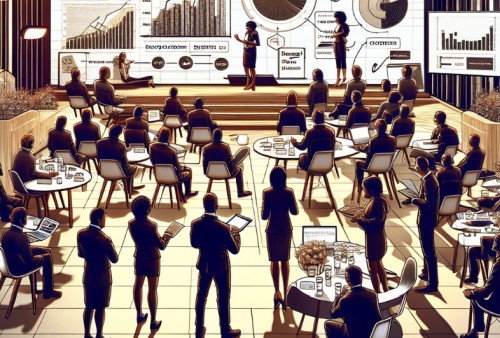
- Micro‑summits are small by design (12–40 people, 60–120 minutes), hand‑picked, and role‑aware. They blend three modes: context framing, individualized demonstration, and facilitated participation. That participation matters: getting prospects actively involved keeps attention and persuades better than a one‑way broadcast, especially when you direct benefits to the specific needs of each role in the room .
Designing the run‑of‑show to create decisions
- Segment by role. The same solution must be demonstrated three ways: a hands‑on view for users, an economic story for finance, and a directional narrative for executives. Tailoring by stakeholder within the same session is more persuasive than any generic pass; a classic example is the laptop sale structured to give a “hands on” to users, unit‑economics to finance, and a “what’s new/why now” view to the CEO .
- Stage participatory moments. Use in‑room prompts—calculators, scenario polls, or brief “choose your priority” segments—to keep prospects doing, not merely watching. Participation sustains interest and deepens recall .
- Make believability obvious. Sincerity, clear command of the product, and measured claims build trust during live sessions. When you don’t know, say so and follow up—bluffing erodes confidence and lengthens cycles .
- Anchor with demonstration. Demos appeal to more than hearing; seeing and doing make benefits believable. Decide what must be shown vs. what can be told, and add just enough originality to make the moment sticky. Most importantly, test your materials and environment until the demo is smooth; fumbling through a demo is a fast path to lost credibility .
The micro‑summit blueprint
- 10 minutes: Context that reframes the problem. Draw a line from market drivers to your thesis of value.
- 20 minutes: Role‑split discovery. Break responses into patterns by buyer role; use their language verbatim.
- 25 minutes: Tri‑track demonstration. Users see workflow; finance sees drivers and levers; executives see strategic fit and risk reduction. Individualize the benefits for each audience to maintain interest .
- 10 minutes: Value modeling. A quick scenario calculation, done with the audience, shifts the discussion from features to outcomes. Participation turns benefits into their numbers .
- 10 minutes: Objection surfacing. Invite objections early; classify, answer sincerely, and capture unanswered items for fast follow‑up. Treat objections as signal rather than threat .
- 5 minutes: Next‑step choreography. Offer two clear paths: immediate scoping call or tailored proof session, each with a scheduler link live on screen.
From “webinar” to micro‑summit: format choices that lift intent
- Blend pre‑recorded clarity with live trust. Mixing prerecorded sections (to control pacing) with a live Q&A block delivers quality without sacrificing interaction .
- Offer three access modes: scheduled live, scheduled prerecorded with live Q&A, and on‑demand. Each mode serves a different buyer readiness state; on‑demand extends reach without adding staffing overhead .
- Engineer reliability first. Until every attendee has flawless bandwidth, pair streaming with a simple teleconference bridge, and keep the technology conservative and tested—your goal is frictionless dialog, not maximum multimedia .
Demo mechanics that move deals forward
- Simulate or download when “live” is risky. Real‑time interactive demos can be derailed by variables you don’t control. A simulated or partially live “guided tour,” paired with a full downloadable trial or time‑boxed product, often converts better and avoids on‑air disasters .
- Use “decision artifacts.” Provide a one‑page economic model, a recorded clip of the key workflow, and a role‑specific checklist. These travel inside the account after the event and help champions sell internally.
Economics: why small beats big
- Roadshows and large seminars are powerful but costly. A typical 10‑city seminar tour can easily run six figures, with cost per attendee in the mid‑hundreds and a painful no‑show rate—acceptable only when the accounts are perfectly targeted and conversion justifies it .
- Digital events can match the reach of in‑person programs at roughly a tenth the cost, as large‑scale webcasters have demonstrated by drawing thousands live and multiples more on‑demand without travel or venue spend .
- Be wary of “lead volume” from big shows. Trade show badge scans often inflate lead counts while depressing quality; without stringent targeting, you pay to fulfill junk leads. Tight, invite‑only formats consistently produce higher qualification density and a clearer path to opportunity creation .
Getting the right people in the (virtual) room
- Invite with intent. Use direct mail for high‑stakes invites, telemarketing for surgical follow‑up, and permissioned email and owned banner placements for efficient reach. Public relations can amplify via trade mentions and links to your event page .
- Make registration the first qualification step. Send personal access codes to a preselected list; when invitees land on the event URL and enter the code, prefilled data appears for confirmation and update—simultaneously improving data quality and signaling seriousness. Add a few qualification questions to prioritize outreach before and after the event .
Extend the moment: after‑burners that keep deals hot
- Archive and atomize. Record the session, segment it by role, and publish an on‑demand library for latecomers and internal sharing. Some organizations even produce a lightweight CD/USB or downloadable pack to help members brief local clients—a tactic used to good effect in timed webcasts around major conferences .
- Survey to qualify. Immediately after, send a two‑minute questionnaire to capture intent and timing while the experience is fresh. It’s both feedback and a rapid sort for sales follow‑up .
Measurement that ties directly to pipeline
- Attendance funnel: invitations sent → registrants → confirmed attendees → show‑up rate (target: >60% for curated lists). Use the live chat, poll, and calculator participation rates as a proxy for engagement quality.
- Meeting conversion: percent of attendees who accept a scoping call within 7 days; track by role and by account tier.
- Stage advancement: opportunities created, deal stage moved, cycle time vs. non‑attendee cohort, and average deal size.
- Demo coverage index: which buyer roles experienced their tailored segment (user/finance/executive) and whether corresponding artifacts were downloaded.
- Cost per qualified meeting: combine spend (production + promotion) with meetings booked; compare against other top‑of‑funnel channels using the same definition of “qualified.”
Pitfalls and pragmatic guardrails
- One‑size‑fits‑none demos. Solve this with role‑split storytelling and individualized benefit emphasis to maintain interest and relevance .
- Tech theatrics over reliability. Keep formats simple, add a voice bridge, and rehearse relentlessly; your credibility rests on smooth execution, especially for demos .
- “Spray and pray” invites. Curate the list, personalize access, and let registration do double duty as database hygiene and qualification .
A 30‑day plan to launch your first micro‑summit
- Week 1: Choose a tight theme linked to a common decision trigger. Map user, finance, and executive outcomes. Draft a run‑of‑show with two interactive moments and one objection surfacing block.
- Week 2: Build an event URL with personal access codes and prefill logic. Draft invite copy for direct mail and permissioned email; schedule surgical call‑downs for Tier‑1 accounts. Set two alternative access modes (live + on‑demand).
- Week 3: Rehearse end‑to‑end, from welcome to next‑step scheduling. Test streaming plus a teleconference fallback. Validate demo transitions and stakeholder hand‑offs against a checklist to avoid on‑air fumbling .
- Week 4: Go live. Send the post‑event survey immediately. Within 24 hours, publish the segmented on‑demand cuts and route hot responses. Debrief in 48 hours and lock improvements for the next run.
The bottom line Micro‑summits and demos that drive pipeline are not “presentations”—they are decision rehearsals. When you craft them around participation, individualized benefits, and smooth, believable demonstrations—and when your registration, delivery, and follow‑up are instrumented end‑to‑end—you turn an hour of attention into a measurable step forward in the deal. The technology and tactics to do this at scale are established, from reliable streaming plus phone bridges to smart registration flows and on‑demand libraries; the difference is the intent: build an event that changes what the buyer believes and what the buying team does next.